Yep, it can be uncomfortable talking about anything below the belt but there is nothing to feel embarrassed about as these infections can happen to anyone irrespective of age, and gender as we all fall out of balance from time to time.
Ayurveda is considered the world’s oldest medical system. Where “Ayur” means life and “Veda” depicts knowledge. It is a holistic approach to healing that aims at curing the disorder from its roots, treating and restoring health by understanding the very cause of the diseases. Treatment of UTIs with Ayurveda through this scientific approach can help prevent and control infections from flaring up and indeed recurring.
Managing and treating urinary tract infections involves detoxification (flushing out of infection), and clearing blockages of the urinary tract through the incorporation of herbal medications along with expert suggested dietary and lifestyle changes for efficient and long-term recovery. For best and most effective results Ayurveda treatment has been proven to provide long-term relief from discomforting symptoms.
Let’s kick off with Cystitis…What is it? What are its causes and how to treat it.
Cystitis refers to infections of the lower urinary tract, more specifically the urinary bladder. There is of course something labeled `Honeymoon Cystitis’, which refers to an agitation of the bladder due to too much afternoon delight….this is different! Most cases however refer to the disease that occurs when a bacteria which was earlier living on the skin and bowel harmlessly, instantly enters the urethra and bladder. As soon as it enters it proliferates and fastens to the lining of the bladder causing extreme abdominal pain and discomfort, most often with additional symptoms of cloudy or smelly urine, and/or difficulty with intolerable pain while urinating. A general Urinary Tract Infection (UTI) however, is an infection that affects any part of the urinary system including the ureters, kidneys, bladder, and urethra. So the two infections differ slightly and require similar approaches but need to be identified to avoid complications. UTIs are usually caused by the same bacteria such as Escherichia.coli (E.coli) that enter the urinary tract through the urethra.
Cystitis/UTI is more common in women than men. The reason is that women have a shorter urethra that is closer to the anus. This biological structure favours bacteria to enter the body easily.
In Ayurveda, this infection is known as “Mutrakrichcha”. Which is a combination of two energy imbalances…1.Vata (Air & Ether) the mind-body element responsible for movement, including processes like blood flow, elimination, breathing, and the movement of thoughts in your mind and 2. Pitta (Fire and Water) the energetic force that regulates the body’s transformative functions; digestion, metabolism, even the body’s hormones. This imbalance between the two energies is the primary factor leading to this type of health complication. So what contributes to these imbalances?
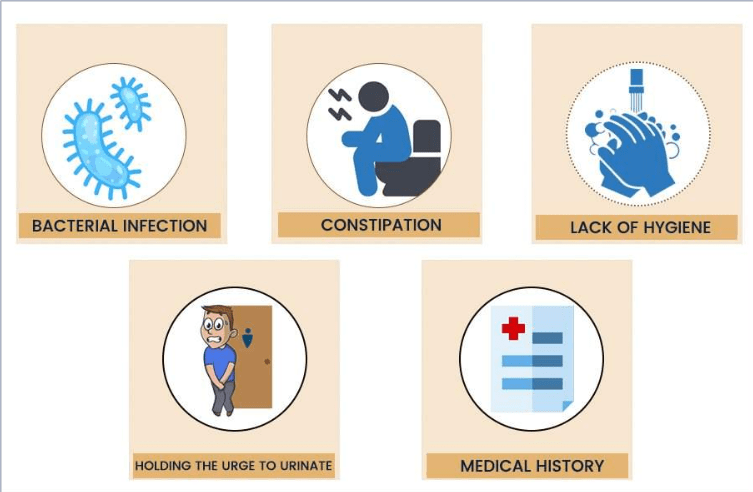
The prime contributing factors are:
Bacterial Infection-One of the most common reasons for most UTIs is bacterial infections. However, the invasion and proliferation of bacteria on the lining of the bladder is the main reason for cystitis. Bacteria can enter the body through the anus or urethra. Once inside it travels to the bladder causing inflammation and pain. In most cases, cystitis is caused by a bacteria named E-coli.
Other contributors to this condition are:
Constipation – Uncomfortable bowel movements can increase the chances of bladder infection in two ways i.e. the resistance of stool in the rectum and urine retention which together lead to a bladder infection. When a stool remains in the colon for a longer period it puts pressure on the bladder, resulting in abdominal pain. Additionally, it also supports bacterial growth that ultimately results in cystitis.
Menopause -During menopause the epithelium lining of the bladder gets affected when women reach a menopause. The lower part of the urinary tract is sensitive to estrogen i.e., a decline in the levels of this hormone favours the growth of “bad” bacteria thus increasing the chances of cystitis to occur.
Weak Immune System – A weak and ill-functioning immune system may account for a bladder infection. The immune system’s overactive response to urinary tract infection may increase the risk of developing cystitis.
Hygiene – Hygiene is a must for preventing all disorders. Not cleaning the genitals after urinating or using the same undergarments increases the risk of urinary tract infections. Flushable pH wet wipes are great to have in the hygiene armoury.
Holding the urge to Urinate – Timely elimination of waste materials is necessary in order to prevent these complications. Holding the urge to pee for extended periods creates an ideal condition for bacterial growth. Additionally, it can also increase the chances of renal-related issues.
Diabetes and kidney stones – Diabetes: Higher sugar levels in the blood and urine can favour the growth of bacterial infection.
Kidney stones: The kidney stones are passed out from the bladder and if a person experiences pain and a burning sensation while urinating it is a direct indication of bladder infection.
General Medical History – The risk of having cystitis is magnified, if someone is already suffering from diabetes, kidney stones, or related illnesses. The excess consumption of certain medications can make the bladder inflamed or irritated which could turn into cystitis in the long run.
Certain factors can increase the risk of developing a UTI in women, such as
Inflammation: STIs (Sexually transmitted infections) can cause inflammation in the genital area, which can increase the risk of UTIs by making it easier for bacteria to enter the urinary tract.
Use of specific birth control methods: Diaphragms and spermicidal agents can increase the risk of UTIs.
Symptoms of Cystitis
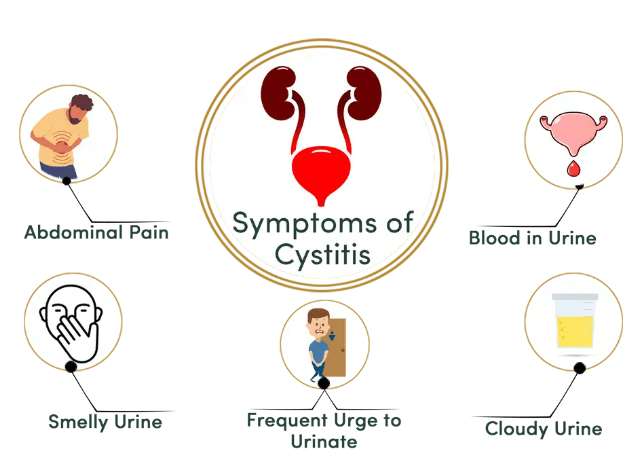
Frequent Urge to Urinate – If suffering from any urinary tract infection the person may experience pressure on the bladder and an urge to urinate more frequently.
Cloudy Urine – is characterised by milky colour urine instead of clear or transparent. It is generally harmless, but if it appears more repetitively then indicates a sign of a urinary tract infection.
Abdominal Pain – A person suffering from a bladder infection may experience pain in the lower abdomen and a burning sensation while urinating.
Blood in Urine – When an extreme amount of pressure is felt on the bladder. The walls of the bladder become irritated and inflamed. This leads to bleeding while passing urine.
Smelly Urine – Bacterial infection in the bladder can result in a strong fish-like smell in the urine.
Some of the most effective Ayurvedic Home Remedies for Cystitis:
There are a number of Ayurvedic home remedies for cystitis treatment that help the patient get rid of urinary tract infections naturally. Some of these remedies are as follows:
Ayurvedic Herbs come in powder or tablet form and it is always best to consult your Ayurvedic practitioner for guidance and an overview of the quality of the product.
Herbs being nature-derived hold immense power to cure several intolerable diseases. The use of these herbs has proven to be effective in this 5000-year-old root-based relief. Additionally, they do not cause any side effects. The best herbs for cystitis are:
Haldi: It is also known as the herb of healing. It is a potent anti-inflammatory agent that reduces the swelling of interstitial cystitis and ensures relief. Being rich in anti-bacterial properties, it also kills the bacteria inside the body.
Amla: Amla is loaded with vitamin C which makes it an effective remedy for treating cystitis. It aids in frequent urination, abdominal cramps, as well as other discomforting complications caused.
Gokshura: Gokshura is excellent at clearing bladder dysfunction. If consumed in an ideal quantity, it will tone & strengthen the bladder muscles and prevent frequent urination. Due to such healing nature, it is considered one of the best herbs for cystitis.
Varuna: Varuna is best for urinary tract infections. It aids in easing the complications of cystitis by increasing urine flow and reducing the burning sensation while urinating.
Punarnava: Aids in balancing the Vata and Pitta Dosha, the imbalance of those considered the prime cause of cystitis. It has a diuretic effect that aims at reducing the burning sensation by rejuvenating the body. In addition to cystitis, it is also helpful in treating kidney stones.
Water intake
Another easy home remedy that you can opt for is to drink plenty of water particularly warm water. It will support the smooth and proper elimination of waste products by increasing urine volume. The chances of cystitis become minimum as bacteria had already vanished throughout the urine.
Another effective home remedy that gives positive results is to drink daily coriander juice which helps nourish and heal the urinary tract by flushing out all the toxins.
Whilst modifying your diet to align with your Dosha type is best to keep diseases at bay, minimising the consumption of non-vegetarian food is also recommended in general as it gives a hike to bacterial growth. In addition to non-vegetarian food, the consumption of junk, processed, frozen, spicy, and highly acidic foods should also be avoided.
A Vitamin C-rich diet is great for Cystitis. C Rich Foods you can include in your Diet are: – Bananas, melons, blueberries, watermelons, mango, avocados, beetroots, mushrooms, spinach, cucumber, sweet potatoes, and broccoli are some bladder-friendly foods. The consumption of these fruits and vegetables will surely help you to attain relief.
Personal Hygiene – For keeping urinary tract infections at bay, hygiene management is a must. Maintain good hygiene by washing the area after urinating and keeping it clean and dry. Wipe from front to back (us girls know this yet somehow hovering over s public seat with our leotard wedged to the side…it all goes out the window! )Disposal pH-balanced wet wipes are great too. Also, change your undergarments daily. These habits will surely help to minimise bacterial growth.
Herbal Massage – Massaging the affected areas of inflammation and pain with herbal ointments like clove oil, lavender oil, cumin oil, or virgin coconut oil has been proven very beneficial. Ensure that these potent oils are diluted in a good carrier oil. The upside is that they will also nourish the skin.
The tools of Yoga and Meditation – the movement of Yoga (e.g. Cystitis centric poses include Bridge, Garland , Gomukhasana, Ardha Matsyendrasana & raised leg postures) Meditation is an effective remedy for cystitis too. Performing yoga helps strengthen pelvic floor muscles and reduces pain whilst Meditation improves the symptoms of interstitial cystitis by removing the mental discomfort and distress.
Things to avoid during a Cystitis episode:
• Do not hold the urge to urinate.
• Do not consume spicy, junk, processed, oily & fried foods and non-vegetarian food. These foods favour bacterial growth.
• Do not use chemical-based products like soaps, moisturisers, creams, etc, especially on your sensitive skin area. Substitute them with natural products like aloe vera gels, virgin coconut oil, or reetha soap.
• Do not smoke or drink alcohol as they can trigger complications.
• Do not use the same garments for extended periods.
• Do not drink coffee, tea, or any other caffeine-based drink in excess. Instead, go for herbal teas or Kadha tea-(2 cups of water, 1 inch of peeled ginger, 4-5 cloves, 5-6 black peppercorns, 5-6 fresh basil leaves, ½ tsp honey and a 2 inch piece of cinnamon stick)
• Minimise excessive stress.
Ayurvedic Treatment for Cystitis/UTIs through a qualified practitioner includes:
Panchakarma therapy is the principal procedure of Ayurvedic treatment which helps in detoxification and cleansing of the body system. Treatment for Cystitis and UTIs include:
Snehapana: Oral administration of medicated ghee.
Abhyanga: Whole body oil massage which helps refresh both physical and mental health. It additionally improves circulation and unblocks channels.
Swedana: The medicated steam bath that restores metabolism by flushing out accumulated body toxins.
Guidance on performing yoga asanas daily can help strengthen the pelvic region and urinary system which altogether effectively treat and manage the symptoms of cystitis. Other Ayurvedic Treatments for Cystitis along with herbal medications also involve certain dietary and lifestyle changes that aid in effective recovery from the disease symptoms. Having more fibre in the diet promotes a healthy bladder. Some of the tastiest choices include legumes, broccoli, bananas, and strawberries.
FAQ’s Cystitis/UTIs:
How long can Cystitis last? Most of the time, cystitis gets cured on its own within a few days or a week. This type of cystitis is described as acute and does not require any specific medical treatment. But sometimes, the symptoms of cystitis won’t go away that easily. The complications of chronic cystitis can last for weeks and become recurrent. Strict medical action becomes necessary at this stage and Ayurvedic treatment has been considered the most effective way through which relief can be attained and maintained.
How long does general urinary pain last?
The duration of urinary pain can vary depending on the cause of the pain. Generally, if the urinary pain is caused by a urinary tract infection (UTI), it can last for several days to a week or more, depending on the severity of the infection and how quickly it is treated. If the pain is caused by a kidney stone, the pain may last until the stone passes through the urinary tract, which can take several days to a few weeks.
How do you stop getting Cystitis? To restrict the development of Cystitis, adopt Ayurvedic treatment consisting of herbal remedies, dietary precautions, hygiene management, yoga, and meditation.
Which bacteria commonly triggers bladder infection? The bacteria Escherichia coli (E. coli) mainly triggers urinary tract infections. But, there are certain other bacteria also which can cause urinary tract infections.
Can Stress cause bladder infection? Disturbed mental health can greatly impact overall health. A bladder infection can be triggered and flared if the mental and physical stability is not well maintained
What are the complications associated with a persistent bladder infection? There are several serious health complications associated with cystitis including hematuria, acute renal failure, bladder rupture, and pyelonephritis.
Does an unhealthy diet cause a bladder infection to flare up?
The diet plays a pivotal role in ensuring healthy and disease-free living. Therefore, Ayurvedic Treatment for Interstitial Cystitis mainly focuses on adopting a healthy diet choice along with herbal medications that aid in effective recovery. Foods that are suggested to be avoided are artificial sweeteners, spicy foods, caffeinated products, and acidic fruits as these substances can irritate the bladder and cause dehydration, which can exacerbate UTI symptoms.
Foods that are recommended to prevent cystitis must be rich in vitamin C, and calcium.
Can Cycling a bike cause Cystitis in women? The area closest to the saddle is an area that already contains a lot of bacteria, however, the extra warmth and sweat caused by cycling can increase the bacterial colonies if cyclists are not very careful. The friction caused by the saddle can also help to force these bacteria up the urethra and into the bladder.
How do female cyclists prevent UTIs? Lubricate: Use Vaseline or chamois cream to provide lubrication to the labia, groin, and inner thighs to prevent chaffing and saddle sores. Hydrate: Drink plenty of water and empty the bladder without delaying too much. As well as the obvious hydration benefits this will prevent urinary tract infections.
Is ginger good to prevent Cystitis? Yes, because ginger possesses antimicrobial properties which act powerfully against bacterial strains. It is Ayurveda’s suggested best herb to prevent bladder infection or cystitis.
Why is UTI pain worse at night? During the night, the body’s energy is focused on healing and repairing itself, which can cause increased inflammation and pain in the affected area. Additionally, when a person lies down at night, it can put pressure on the bladder and urinary tract, which can worsen the symptoms of a UTI.
What measures should be taken to prevent bladder infection recurrence? The preventive measures are all the above plus adding remedies into your daily diet from the table below:
| Natural remedies | Method | How it works | |
| 1. | Coriander Seeds (Dhaniya) | 1 teaspoon of Triphala powder or tablet can be consumed with lukewarm water at night after meals. | Coriander seeds are a natural diuretic that can help to flush out toxins from the urinary tract. It has anti-inflammatory and antimicrobial properties which help in reducing inflammation and pain. In addition, Coriander seeds are rich in antioxidants, which can help to boost the immune system and prevent infections. |
| 2. | Triphala | Triphala is an ayurvedic herbal supplement that contains three fruits (Amalaki, Haritaki, and Bibhitaki) that have antioxidant and anti-inflammatory properties that can help reduce inflammation and fight off bacteria in the urinary tract. | Triphala is an ayurvedic herbal supplement that contains three fruits (Amalaki, Haritaki, and Bibhitaki) that have antioxidant and anti-inflammatory properties that can help to reduce inflammation and fight off bacteria in the urinary tract. |
| 3. | Kutki (Picrorhiza kurroa) | Kutki has anti-inflammatory and antimicrobial properties that can help reduce inflammation in the urinary tract and fight bacterial infection. It also boosts your immune system, which can help your body fight off infections. This amazing herb protects your liver from damage due to certain medications used to treat UTIs. | Kutki has anti-inflammatory and antimicrobial properties that can help reduce inflammation in the urinary tract and fight bacterial infection.It also boosts your immune system, which can help your body fight off infections. This amazing herb protects your liver from damage due to certain medications used to treat UTIs. |
| 4. | Amla (Indian gooseberry) | Drink Amla juice mixed with honey or an Amla tablet with lukewarm water to help fight UTIs. | It has Antibacterial, anti-inflammatory properties which can help to kill the bacteria responsible for causing UTIs reduce inflammation, and provide relief. It supports the immune system, which can help the body to fight off infections, including UTIs.It has diuretic properties, which can help increase urine production and flush out toxins and bacteria from the urinary tract. |
| 5. | Giloy (Tinospora Cordifolia) | One of the most common ways to consume Tinospora cordifolia is by boiling the stem in water to make a decoction(Kadha). It can be consumed daily on an empty stomach or after meals.It is also available in powdered form and tablet form which can be taken with water. | It has Antibacterial, and anti-inflammatory properties which can help to kill the bacteria responsible for causing UTIs reduce inflammation, and provide relief. It supports the immune system, which can help the body to fight off infections, including UTIs.It has diuretic properties, which can help increase urine production and flush out toxins and bacteria from the urinary tract. |
| 6. | Probiotics | One cup of Curd and Buttermilk can be consumed with meals during the day time. Or purchase from a health store in tablet form and keep it in the fridge or make your own Kefir yogurt | Probiotics are live microorganisms that are beneficial to human health, particularly in maintaining a healthy balance of bacteria in the gut. Probiotics can provide immense benefits for urinary tract health and the prevention and treatment of urinary tract infections (UTIs). Probiotics can help maintain a healthy balance of bacteria in the urinary tract, which can help prevent the overgrowth of harmful bacteria that can cause UTIs. Punarnava contains several compounds that have anti-microbial properties, including punarnavine and boeravinones. These compounds can help fight off bacteria that cause UTIs. Punarnava can help promote a healthy urinary tract by helping to maintain the proper pH balance and preventing the growth of harmful bacteria. |
| 7. | Punarnava (Boerhaavia diffusa) | Punarnava leaves or roots can be boiled in water to make a decoction (Kadha). This decoction can be consumed twice a day to help treat UTIs. Another way of consuming punarnava is taking it in the form of a tablet morning and the evening after meals. | Punarnava contains several compounds that have anti-microbial properties, including punarnavine and boeravinones. These compounds can help fight off bacteria that cause UTIs.Punarnava can help promote a healthy urinary tract by helping to maintain the proper pH balance and preventing the growth of harmful bacteria. |
| 8. | Gokshura (Tribulus Terrestris) | Gokshura can be taken in different forms, such as in 1 teaspoon of powder (Churana) or one tablet with lukewarm water at night. | Urinary tract infection treatment includes the amazing herb Gokshura. It has diuretic, anti-inflammatory, and antibacterial properties. It helps reduce inflammation in the urinary tract and relieve pain and discomfort associated with UTIs. It is known to support the kidneys, which are vital in filtering waste products and excess fluids from the body. |
| 9. | Ghritpaan: Cow’s Desi Ghee (Clarified Butter) | Consumption of 1 teaspoon of Cow’s Desi Ghee on an Empty stomach in the morning is recommended in Ghritpaan. | Cow’s Desi Ghee has the marvelous quality to lubricate the gastrointestinal tract and all tissues.Ghee builds the Immune system (Ojas) and detoxifies the body. |
| 10. | Shatavari (Asparagus racemosus) | Shatavari can be taken in various forms, such as in powder(Churana), capsules with lukewarm water at night, or in the form of tea after meals twice a day. | Cow’s Desi Ghee has the marvelous quality to lubricate the gastrointestinal tract and all tissues. Ghee builds the Immune system (Ojas) and detoxifies the body. |
How to get rid of Yeast Infection naturally with Ayurveda?
Several health concerns are becoming more and more common among women due to increased pollution, hormonal fluctuations, poor hygiene management, and distress. Often women hesitate to take medical action and even avoid talking about it.
One of these issues is- Yeast infection, also known as Vaginal candidiasis. It affects around 30-50% of women all over the world. There is a need to be extra cautious while dealing with yeast infections because, unlike other skin diseases, they are contagious.
Worry not!
Reading this will help you to have a clear understanding of the term Yeast infection, along with its symptoms and causes. You will also come to know how relief can be ensured against this unpleasant disorder with the help of Yeast infection Ayurvedic treatment.
What is a Yeast Infection?
It is a type of fungal infection that mainly affects the Vagina and associated parts of the genitalia. It causes extreme pain, itchiness, and discomfort.
If left untreated, it can also lead to several complications such as a burning sensation while urinating.
What causes Vaginal candidiasis?
There could be several factors responsible for the development and growth of yeast infections. A brief of these causative factors is as follows:
Candida – Yeast infection is mainly caused by a yeast, called candida. Yeast is a special type of fungus, whereas candida is a subtype of yeast. Generally, it is found on the skin, or inside the body such as the mouth, gut, throat, or vagina, and causes no harm.
In certain cases, the yeast (candida) gets imbalanced and starts to grow rapidly, ultimately leading to yeast infections.
Uncontrolled diabetes – One of the prominent factors contributing to a yeast infection is diabetes. High sugar levels in your blood support bacteria to grow more rapidly, consequently resulting in yeast, (fungal) infections.
Hormonal imbalance – Hormonal fluctuations can also fuel yeast infections. Any imbalance in the levels of estrogen, or progesterone upsets the natural balance of the body. It also stimulates the bacteria that is responsible for keeping everything under control in the vagina. It creates a space for candida to flourish.
Antibiotic use – Broad-spectrum antibiotics kill the bacteria without differentiating whether it is healthy, or not, as a result, the harmonious balance of yeast and bacteria in the vagina gets delicate. Such circumstances provide a favourable condition for candida to multiply.
Risk factors of yeast infections
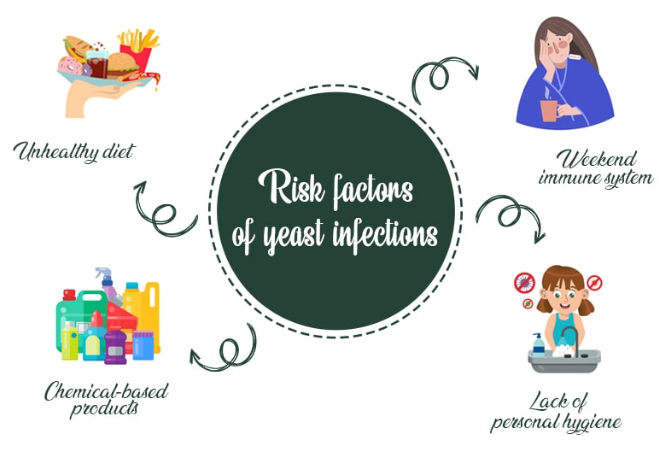
There are certain things that can make you vulnerable to vaginal yeast infections, such as:
Unhealthy diet
Yeast infections might be accompanied by a faulty diet. Foods that are high in sugar, gluten, and artificial nutrients can worsen the condition. Excessive dairy products, Non-vegetarian food, alcohol, and even certain sugar-rich fruits such as bananas, dates, raisins, grapes, and prunes can trigger yeast fungal infection.
Week immune system – It is very bothersome for a compromised immune system to fight against viruses and bacterial infections. You are more prone to yeast infections if you are already suffering from any auto-immune disease such as Rheumatoid arthritis, lupus, or inflammatory bowel disease.
Lack of personal hygiene – Fungi require a humid and moist environment to grow. Unhygienic habits such as not taking a shower after a workout, not cleaning the genital areas, and wearing tight or dirty undergarments for extended periods push your steps forward toward concerns such as urinary tract infections or yeast development.
Chemical-based products Avoid using chemical-based or other harmful substances-containing products on the skin, especially the sensitive areas. These products disturb the pH levels of the skin and cause problems such as itching, burning sensation, and pain while peeing or intercourse. However, yeast infections are seen in women more, but it does not mean they have nothing to do with men. In case of high sugar levels, weakened immune system, distress, or absence of hygiene, they can affect males equivalently.
What are the symptoms of Vaginal candidiasis?
For yeast infections, the symptoms may vary from patient to patient depending upon their immunity power, intensity of infections, and body Prakriti (Your natural energetic balance state) Certain complications that patients complain the most are as below:
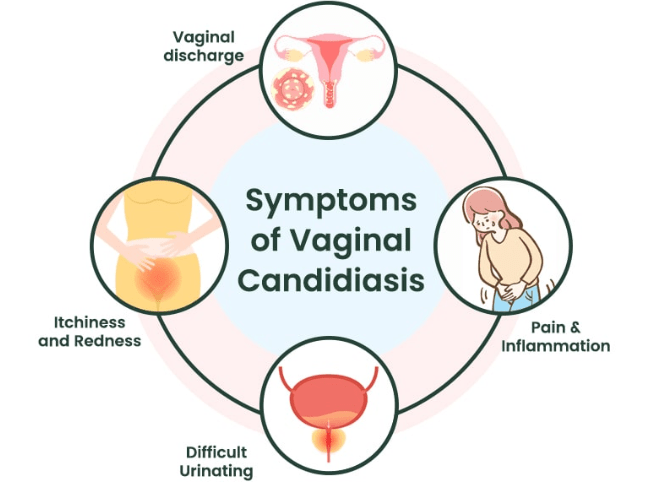
Vaginal discharge – A whitish-yellowish discoloured discharge can flow from the vagina. It could be watery, or a little thick like curdled milk with little lumps, doubtlessly very discomforting.
Itchiness and Redness – Yeast infections make the vulva- the outside areas of the vagina itchy, rash, and red. While urinating, or performing sexual activities extreme pain is experienced by the patient.
Pain & Inflammation – Swelling of the vulva and vagina is yet another considerable symptom of these fungal infections. Urine does not pass through these swollen paths, and as a result, the patient experiences pain.
Difficult Urinating – Due to swelling of the vulva and itchiness, it becomes very difficult for a patient to urinate. The patient experiences a burning sensation while peeing.
If you are experiencing any of the mentioned symptoms, do not neglect them and opt for yeast infection treatment.
Preventions for Yeast Infection
You are familiar with the term- “Prevention is better than cure”
Right? Then why are we not implementing it?
Below are some natural ways through which you can prevent and protect yourself from these discomforting fungal infections.
Hygiene management – Hygiene is a necessity for keeping diseases at bay. It is highly recommended to keep the genitals clean and dry, especially after excrement. It is pivotal to mention that yeast infections aren’t caused by poor hygiene directly, but they can support fungi growth, making conditions more distressing.
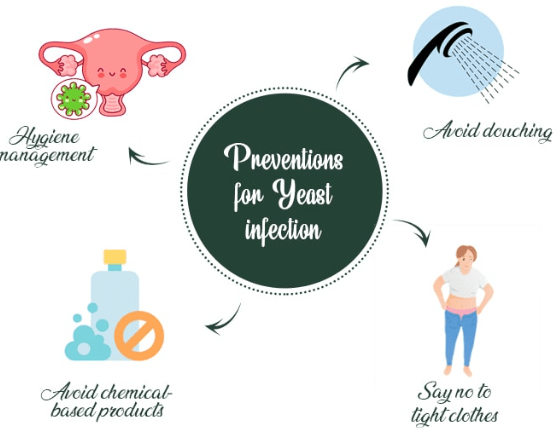
Avoid douching – It is highly recommended to avoid douching as it pushes the bacteria and causes infection up into the uterus, ovaries, and fallopian tubes. Apart from imbalancing the levels of yeast in the vagina, it can also lead to many adverse effects such as cervical cancer, low birth weight, STDs, Ectopic pregnancy, infertility, or pelvic inflammatory disease.
Say no to tight clothes – Wearing clothes that are tight, or made of certain specific fabric such as nylon can trap heat and moisture, providing a safe space for yeast infections to grow.
Avoid chemical-based products – Say a big NO to all types of chemical-based beauty products such as soaps, creams, moisturizers, and serums. They can trigger the pH levels of your sensitive skin and may result in rashes, acne, pimples, or inflammation.
Ayurveda- A concept of holistic healing
In Ayurveda, this disease is considered “Krimi Roga ” which comes under the category of Dardu Kushta (Fungal infection). If the digestive fire is mand (deficient) then it causes indigestion. As a result, the food remains undigested in the intestines for extended periods and provides fertile conditions for yeast to develop and spread.
In severe cases, the yeast can even enter the bloodstream through the intestinal cycle (known as Leaky Gut Syndrome), creating problems such as low immunity, sleeping difficulty, fatigue, and low energy.
Ayurvedic treatment for Yeast infections
Doubtlessly, yeast infections are extremely painful and discomforting but can be cured with certain natural measures. However, several other ways are available for treating vaginal yeast infection but Ayurveda is the best. It is a natural therapy that causes no harm to the body and yields only fruitful results. Yeast Infection Ayurvedic Treatment mainly includes: Herbal remedies
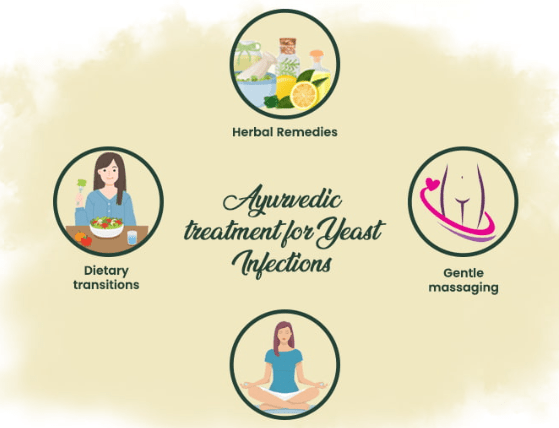
Herbs can act as a panacea for yeast infections. Being nature-derived they are free from side effects and cause no harm to the body. Herbs such as Garlic, Ginger, Neem, Oregano, Turmeric, Guduchi, Clove, Lavender, Ashwagandha, Shatavari, Basil, and Aloe vera are fully loaded with anti-fungal, anti-bacterial, and anti-inflammatory properties.
These herbs can be taken in a powder form along with lukewarm water or in capsule form. You can also add these herbs to your foods as most of them are regular ingredients in your daily meals.
Dietary transitions
Yeast Infection Ayurvedic Treatment also recommends certain dietary modifications to be taken in your daily life. The food you consume acts as a fuel for the body and keeps it functioning and growing. If the intake is not satisfactory, nothing can be done. It is pivotal to make certain healthy choices and say goodbye to detrimental foods such as junk, oily, processed, frozen, under, or overcooked.
Take fresh and water-content-rich fruits and vegetables in your diet. It will not only provide the body with adequate strength but will also aid in the elimination of toxins from the body via sweat and urine.
Best Fruits for Yeast Infections
Avocados, Blackberries, Strawberries, Apples, Guava, Raspberries, Olives, Pears, Cherries, Plums, Melon, Papaya, Watermelon, and Kiwi.
Best Vegetables for Yeast Infections
Cucumber, Broccoli, Kale, Eggplant, Zucchini, Onion, Cabbage, Pointed Gourd, Turnip, Spinach, and Mushrooms.
You can take them in salad form, soups, juices, or smoothies.
Isn’t it tempting? Tasty and healthy both. Then, do not delay further and modify your diet now.
Gentle massaging
Yeast fungal infection can also be treated using certain nature-derived ointments and pastes. Coconut oil, Cow’s ghee, Lavender oil, almond oil, tea tree oil, and sesame oil are considered to be the most effective ointments for yeast infections. Being derived from mother nature, these substances are absolutely free from side effects and will cleanse the body from outside and within.
A gentle massage with these oils will help restore a healthy balance of yeast and bacteria in the vagina. Apart from these ointments, you can also take a bath with buttermilk, or curd to nurture and nourish your body.
Yoga and meditation
If you are assuming that Vaginal yeast infection is only physically painful and awful, then please clear your misconception. Apart from being a physical pain, it is equivalently psychological discomforting.
In Ayurveda, We believe that a sound body and mind are the mere pillars of a healthy body. Whatever is encountered by the body, will eventually affect the mind consciously, or unconsciously and vice versa.
It is highly recommended to add the tools of yoga and meditation to your routine. It will not only provide your body with the strength to fight against bacterial infections, but will also make your mind calm, and peaceful. In fact, it works as a natural candida albicans treatment.
FAQ’s
How to identify yeast infection?
Vaginal Pain, itchiness, redness, inflammation, or a thin discharge from the vagina, or Vulva are some common signs that indicate yeast infections. You may also experience a burning sensation during intercourse, or urinating.
Can yeast infections go away on their own?
If the yeast infections are not that severe, they may get fine on their own, but such chances are very rare. Candida, once it enters the vaginal region starts multiplying itself causing more harm to the body.
What is the main cause of vaginal yeast infection?
A specific type of fungi, called Candida is the main cause for the development of yeast infection. The overgrowth of candida disturbs the healthy balance of yeast and bacteria, resulting in problems such as vaginal discharge, pain, and itchiness.
What are the dangers of a yeast infection?
Certain factors that make you prone to being infected by a candida yeast infection are poor hygiene, use of chemical-based products, poor immune system, wrong dietary choices, hormonal imbalance, and untreated endocrine diseases.
Why do my farts go the wrong way; out through my front and can they contribute to a yeast infection?
Sexual intercourse, pelvic exams, exercise, pregnancy, and menopause can all cause vaginal farts. … Any woman can experience vaginal flatulence. However flatulence from the bowel can be caused by a candida infection and when misdirected through the vagina, is due to the pressure outside of the vagina and gravity which can move pelvic floor muscles into the vagina, especially with pelvic floor dysfunction. Stretching overactive pelvic floor muscles in positions like downward dog or legs wide allows air in and then air pushes out when the pelvic floor returns to its resting state. There is no evidence to suggest that this passed wind carries or contributes to any infection.
Takeaway
The above infections are all slightly different in nature but present very similar conditions in the same body zones. Most are treated by the same methods too including dietary changes, herbs & physical applications. It is important therefore to identify the infection thoroughly to avoid overlooked symptoms that can cause recurrence, undiagnosed acute issues, and long-term damage to certain organs.
 Take A Deep Breath